Introduction

The United States Senate is a chamber of the bicameral United States Congress; it is the upper house, and the U.S. House of Representatives is the lower house. Together, the Senate and House have the authority under Article One of the Constitution to make and pass or defeat federal legislation.

The Senate has exclusive power to confirm U.S. presidential appointments, to approve or reject treaties, and to convict or exonerate impeachment cases brought by the House. The Senate and the House provide a check and balance on the powers of the executive and judicial branches of government. Each of the 50 states is represented by two senators who serve staggered six-year terms, for a total of 100 members.

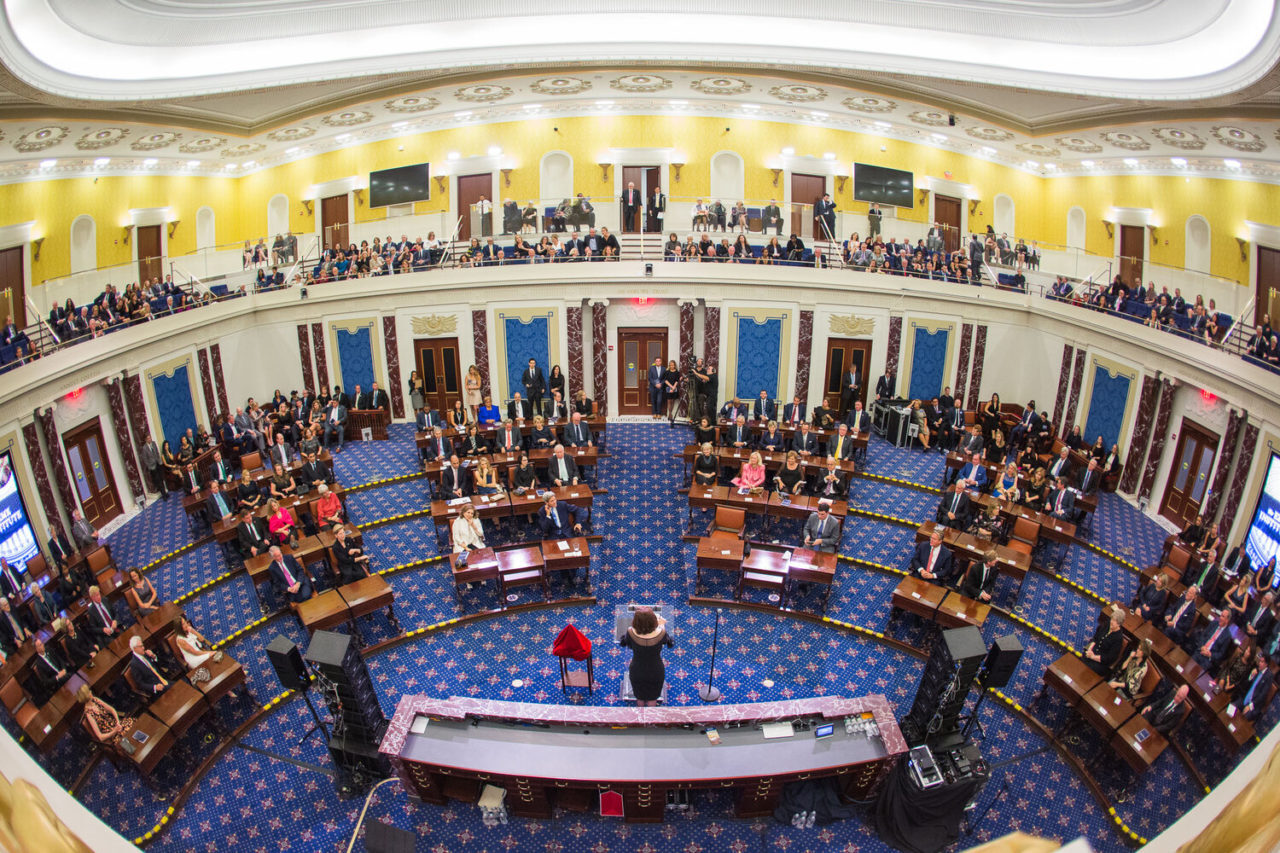
The Senate chamber, with desks arranged around the room
The Senate Chamber.

Origins

First convened in 1789, the Senate of the United States was formed on the example of the ancient Roman Senate. The name is derived from the senatus, Latin for council of elders, derived from senex, meaning old man in Latin. Article Five of the Constitution stipulates that no constitutional amendment may be created to deprive a state of its equal suffrage in the Senate without that state's consent. The United States has had 50 states since 1959; thus the Senate has had 100 senators since 1959.

There will be a timeline here

Representation

Elections

Elections to the Senate are held on the first Tuesday after the first Monday in November in even-numbered years, Election Day, and occur simultaneously with elections for the House of Representatives. Senators are elected by their state as a whole. The Elections Clause of the United States Constitution grants each state and Congress, if it so desires, the power to legislate a method by which senators are elected. Ballot access rules for independent and minor party candidates vary from state to state.

Qualifications

  1. They must be at least 30 years old;
  2. They must have been citizens of the United States for at least nine years;
  3. They must be inhabitants of the states they seek to represent at the time of their election.
Leadership

President: JD Vance (R)
since January 20, 2025
President pro tempore: Chuck Grassley (R)
since January 3, 2025
Majority Leader: John Thune (R)
since January 3, 2025
Minority Leader: Chuck Schumer (D)
since January 3, 2025
Majority Whip: John Barrasso (R)
since January 3, 2025
Minority Whip: Dick Durbin (D)
since January 3, 2025

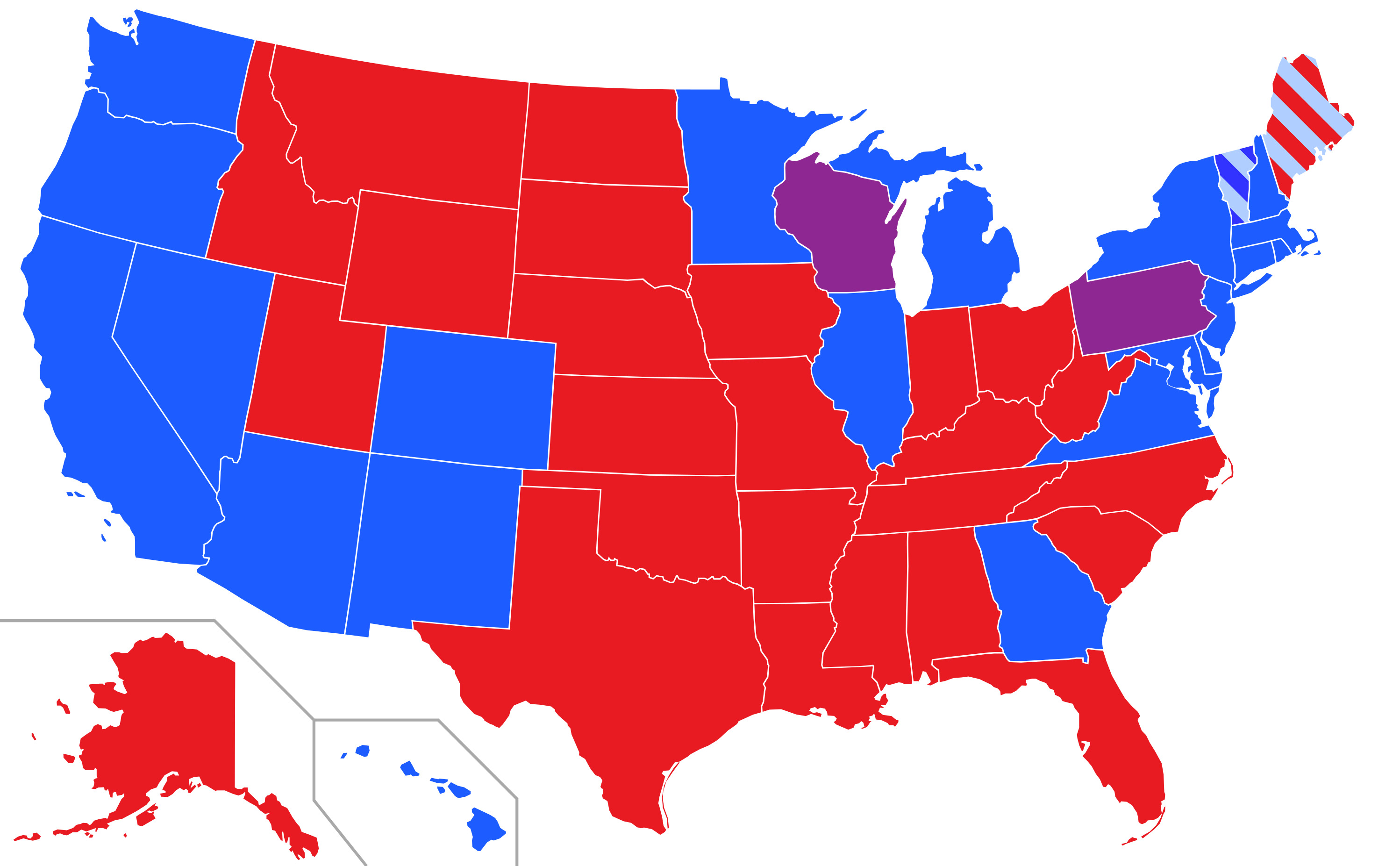
Illustrative map of U.S. states colored by party affiliation

State party affiliation

Explore how representation is distributed across the states.

The Senate's role

Responsibilities

The Senate shares responsibility for federal lawmaking with the House of Representatives. It also has distinct constitutional duties, including considering presidential nominations, consenting to treaties, and conducting impeachment trials.

01

Legislation

Debate, amend, and vote on proposed federal laws.

02

Advice and consent

Review many presidential appointments and approve treaties by a two-thirds vote of senators present.

03

Oversight

Hold hearings and investigate matters of national importance.

How it works

Structure

100

Senators

Each state elects two senators, regardless of population.

6 years

Terms

Senators serve six-year terms, with elections staggered so roughly one-third of seats are up every two years.

50 states

Equal representation

Every state has equal representation in the Senate.